
A handcrafted hardwood cutting board does not require complicated maintenance. Wash it properly, let it dry completely, and refresh it with food-safe oil whenever the wood begins to look dry. Those few habits will protect the board and help it remain beautiful for years.
Most cutting-board damage comes from prolonged moisture, uneven drying, or allowing the wood to become excessively dry. Follow these three rules and you will prevent the majority of common problems.
Clean the board promptly with mild dish soap, warm water, and a soft sponge or cloth. Rinse it without leaving it submerged in the sink.
Wipe away excess water, then stand the board upright so air can circulate around both faces. Do not leave it lying flat while one side remains damp.
Apply food-grade mineral oil when the surface begins looking pale, dry, or uneven. The wood—not a rigid calendar—will tell you when it needs attention.
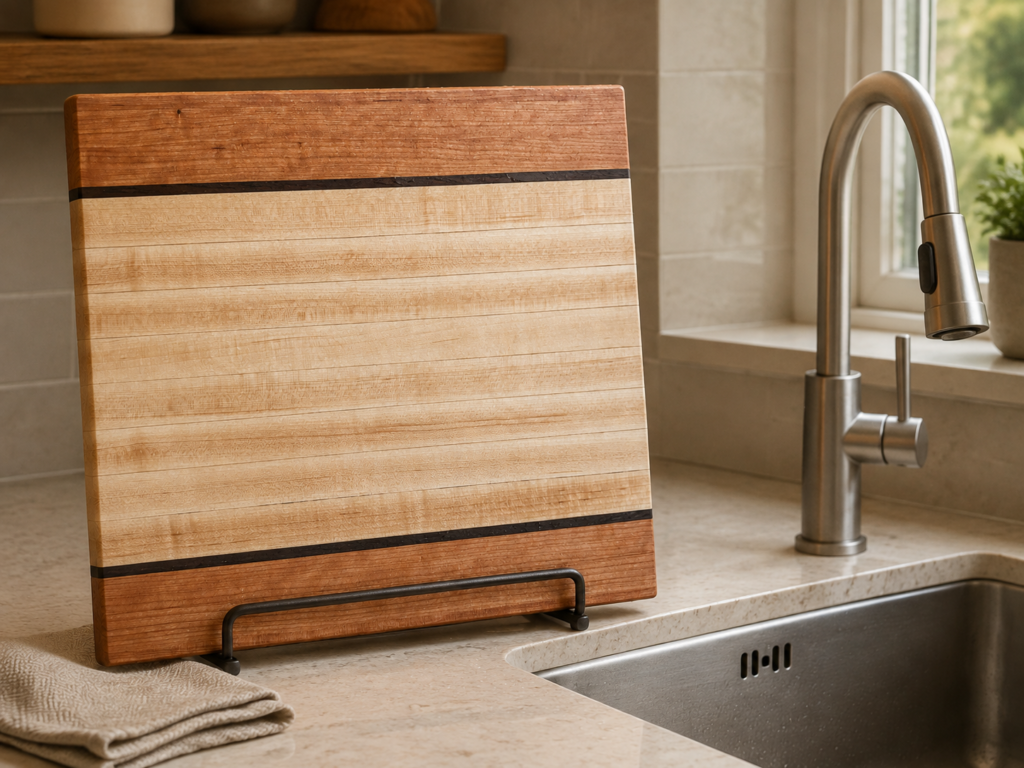
After using the board, remove food scraps and wash the surface with mild dish soap and warm water. Use a soft sponge, dishcloth, or nonabrasive brush. A wooden board can handle ordinary washing—the danger comes from allowing water to soak deeply into the wood.
Wash both faces when the board has been exposed to significant moisture. Wetting only one side can cause uneven expansion. After rinsing, wipe the board dry and stand it upright on one edge until both surfaces are completely dry.
Never leave a hardwood board submerged in a sink or resting flat on a wet countertop.
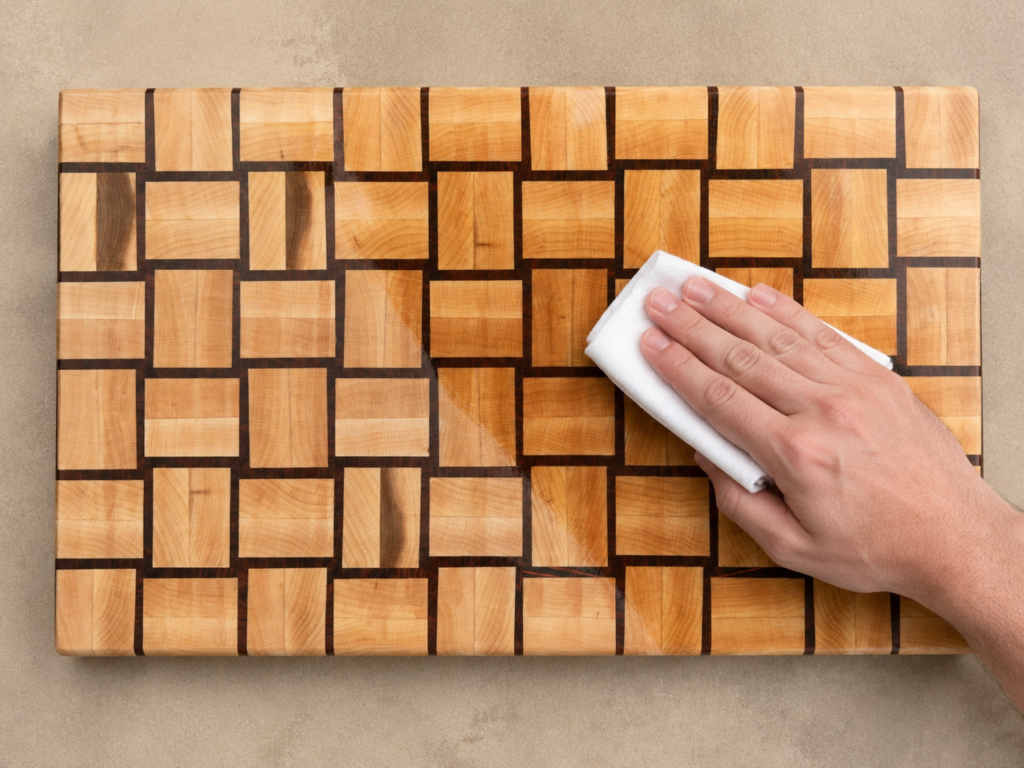
Food-grade mineral oil penetrates the wood and helps prevent it from becoming excessively dry. Apply oil whenever the board begins looking pale, feels rougher than usual, or absorbs water immediately instead of allowing it to bead briefly on the surface.
New boards may need oil more frequently during their first several months of use. Once the wood becomes properly conditioned, the interval between applications will usually increase.
1. Start with a clean, completely dry board.
Oil should never be applied over moisture or food residue.
2. Apply a generous coat of food-grade mineral oil.
Spread it across both faces, all edges, and the ends of the board.
3. Allow the oil to absorb.
Let the board rest for several hours or overnight.
4. Remove any remaining oil.
Wipe the entire board with a clean, lint-free cloth.
5. Apply board conditioner if desired.
A mineral-oil-and-wax conditioner adds surface protection and leaves the wood feeling smooth.
Do not rely exclusively on a fixed oiling schedule. Examine the board and pay attention to changes in its appearance and feel.
The hardwood looks noticeably lighter or less vibrant than it normally does.
The surface no longer feels smooth and may develop a slightly raised grain.
Some areas look conditioned while frequently washed areas appear pale or chalky.
Small drops of water immediately darken the surface instead of remaining briefly on top.
Strongly colored foods, onions, garlic, and other aromatic ingredients can occasionally leave temporary marks or odors. Start with the mildest cleaning method and avoid aggressive scrubbing that can damage the wood fibers.
Rewash the affected area with mild dish soap and warm water, rinse promptly, and allow the board to dry completely. Many temporary odors disappear once the wood is fully dry.
After ordinary washing, sprinkle coarse salt over the board and rub the surface gently with the cut side of a lemon. Let it sit briefly, then rinse away the residue and dry the board upright. This treatment can help reduce lingering food odors and lift light surface discoloration, but it does not replace routine washing or sanitizing.
After any deeper cleaning treatment, rinse the board thoroughly, wipe away excess moisture, and stand it upright until completely dry. If the surface looks pale or feels dry afterward, apply food-grade mineral oil to both faces and all edges before returning the board to regular use.
A handcrafted wooden cutting board is built for years of regular kitchen use, but a few common habits can cause unnecessary damage. Avoid these four mistakes to protect the wood, the glue joints, and the board’s finished surface.
The prolonged heat, water, and drying cycle can cause a laminated wooden board to warp, crack, or separate at the glue joints. Wash the board by hand with mild dish soap and warm water.
Do not leave the board submerged in a sink or sitting in standing water. Wood absorbs moisture, and uneven absorption can lead to swelling, warping, or stress within the board.
Do not place the board on a hot stovetop, inside an oven, or directly beside a strong heat source. Rapid drying and temperature changes can pull moisture from the wood unevenly and cause movement or cracking.
Olive oil, vegetable oil, and other cooking oils can oxidize and develop unpleasant odors over time. Use only food-grade mineral oil and a conditioning wax intended for wooden cutting boards.
A quality wooden cutting board does not need a complicated maintenance schedule. Consistent washing, complete drying, and occasional conditioning are the habits that matter most.
Pay attention to the condition of the wood instead of relying on a rigid calendar. When the surface begins to look pale, feel dry, or absorb water more readily, it is time to apply another coat of food-grade mineral oil.
When the surface looks dull, feels dry, or no longer causes water to bead, clean the board and allow it to dry completely. Apply a food-safe board conditioner—a blend of conditioning oils and protective waxes—such as Walrus Oil Cutting Board Oil or Howard Butcher Block Conditioner, following the manufacturer’s directions.
Knife marks are a normal result of using a wooden cutting board. If years of use leave the surface noticeably rough, it can be lightly sanded with fine-grit sandpaper, working in the direction of the grain. Remove all sanding dust, clean the board, allow it to dry completely, and then reapply the cutting board finish.
Periodically inspect the non-slip feet and their screws to make sure everything remains secure. Clean beneath and around the feet as needed, and allow the underside of the board to dry completely before returning it to the counter.
Proper board care does not need to be complicated. These answers cover the questions that commonly come up when cleaning, conditioning, and using a handcrafted wooden cutting board.
There is no single schedule that fits every kitchen. A frequently used and washed board may need conditioning every one to two months, while a lightly used board may go longer. Condition it when the surface looks dull, feels dry, or no longer causes water to bead.
A cutting board conditioner combines food-safe conditioning oils with protective waxes. The oils penetrate the wood while the waxes improve moisture resistance at the surface. Ingison Woodworks uses and recommends Walrus Oil Cutting Board Oil; Howard Butcher Block Conditioner is another widely available option.
No. Dishwasher heat, prolonged moisture, and forced drying can cause a wooden cutting board to warp, crack, or place unnecessary stress on its joints. Wash the board by hand with mild dish soap and warm water.
Water can temporarily raise some of the wood fibers, especially during the board’s first several washes. Allow the board to dry completely and continue using and conditioning it normally. A slightly raised texture does not mean the board is damaged.
Ingison Woodworks boards are fitted with non-slip feet and are designed with a dedicated upper cutting surface. The feet stabilize the board, protect the countertop, and allow air to circulate beneath it. The underside should still be cleaned, dried, and conditioned as part of regular care.
Yes. A wooden cutting board is a working kitchen surface, and ordinary knife marks are expected with use. If the surface becomes noticeably rough after years of service, it can be lightly sanded with fine-grit sandpaper and then reconditioned to restore a smooth working surface.
Proper care protects the natural beauty and lasting performance of a handcrafted wooden cutting board. Explore the Ingison Woodworks designs or request a board made around the size, style, and character you want in your kitchen.
Whether you know exactly what you’re looking for or just have an idea, tell us a little about the board you’d like to build. We’ll review your request and get back to you to discuss options, availability, and pricing.